Quick Picks
| Product | Best For | Price |
|---|---|---|
| VEVOR Cutting Machine | Cutting your own SVG designs across many material types | Check Price on Amazon |
| Cricut Expression Electronic Cutting Machine | Cutting without opening a laptop | Check Price on Amazon |
| Cutting Machine Crafts with Your Cricut | Project ideas for a machine you already have | Check Price on Amazon |
Disclosure: We earn a small commission from qualifying Amazon purchases at no extra cost to you.
As an Amazon Associate we earn from qualifying purchases. This page contains affiliate links, and we may receive a commission if you buy through them — at no extra cost to you.
As an Amazon Associate, we earn from qualifying purchases.
Last Updated: September 2026
Dorm crafting has one hard constraint that home crafting doesn't: the desk. You get a rectangle of laminate, a shared outlet strip, and a roommate who studies at odd hours. So the question is not "which cutting machine is best" in the abstract — it's which machine's published specifications actually make sense in a room where the machine has to share space with a laptop, a lamp and a stack of textbooks.
This page is a specifications read, not a hands-on review. This website does not do hands-on testing, and nobody here has cut a single sheet of vinyl on any machine below. What follows is a close reading of the manufacturer-published listing specifications for the craft cutting machines available here, plus honest notes about what those specifications do not tell you.
Two machines qualify for this list, plus one project book that's worth knowing about if you already own a cutter. Anything else on a dorm shopping list — laundry, air quality, snacks — is a different article.
One note before the reviews, because it matters more than a filler pick would: there is no mini heat press recommendation on this page. A heat press is a hot-surface appliance going into a room that usually has written rules about hot-surface appliances, and recommending one without manufacturer-published specifications in front of us would be guessing. Check your housing contract first, then shop presses separately.
The Picks
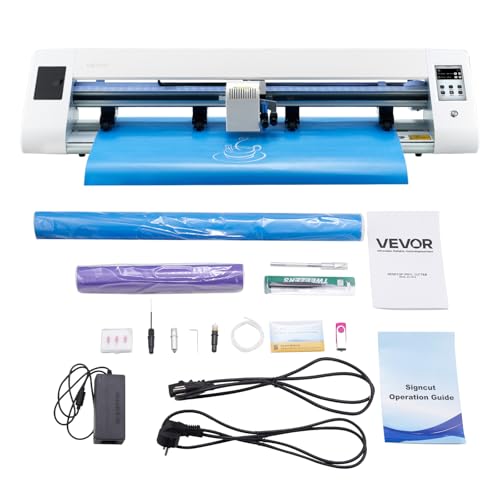
VEVOR Cutting Machine, Automatic Edge Detection Vinyl Cutter Machine with Two Types of Blades, Design Software and Materials, Compatible with Multiple File Formats, for Creating Customized DIY Crafts — Best for cutting your own SVG designs across many material types
Here's the thing about this machine: the specification that should decide it for you isn't the touchscreen, it's the file list. VEVOR states the machine is compatible with SVG, EPS, PLT and AI file formats. That's the format vocabulary of design classes and free SVG libraries alike, which means a design student can move work from Illustrator into the cutter without converting through a proprietary format first.
The cutting figures are specific. VEVOR rates the machine at ±0.1 mm accuracy with cutting speeds from 20 to 400 mm/s, and lists a maximum cut size of 23.6 inches / 600 mm with a maximum paper feed width of 28 inches / 720 mm. Read that feed width as a desk-planning number, not a body dimension — the listing does not publish exterior dimensions, but a machine that accepts material 28 inches wide is going to want a genuinely wide surface plus feed clearance in front and behind. Measure your desk before you order.
Material range is where this one gets interesting for dorm projects. VEVOR says it cuts 100+ materials including adhesive vinyl, HTV, cardstock and EVA foam, with 10 adjustable blade pressure levels, and that the box includes 2 types of blades and 7 materials such as vinyl, HTV and stickers. HTV support matters because it's the front half of a shirt-customizing workflow — the cutter does the cutting, a press or iron does the heat. The listing also states the included design software has a library of pre-made designs and can be used offline, which is a real advantage on flaky campus Wi-Fi.
Pros
- Reads SVG, EPS, PLT and AI, so files from design coursework and free SVG sites both work
- Manufacturer-rated ±0.1 mm accuracy and a 20–400 mm/s speed range gives room for both delicate and fast jobs
- Cuts 100+ listed materials with 10 blade pressure levels, covering vinyl, HTV, cardstock and EVA foam
- Ships with 2 blade types and 7 starter materials, so a first project doesn't need a second order
- Included software works offline
- The listed 28-inch maximum feed width implies a wide working footprint; exterior dimensions are not stated in the supplied listing information, so this is an inference you should confirm against your desk
- The listing does not state a noise level or a duty-cycle rating, so "quiet enough for a sleeping roommate" is not something the published specifications establish
Verdict: Buy this if you work from your own SVG or AI files and want one machine that handles vinyl, HTV, cardstock and foam — and if you have the desk width its 28-inch feed spec implies.
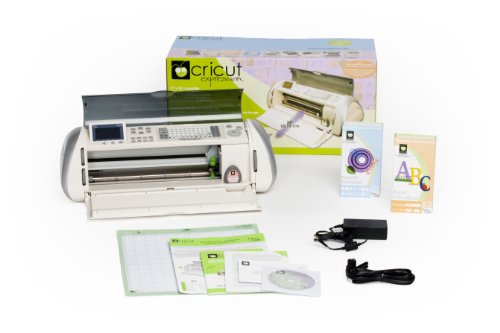
Cricut Expression Electronic Cutting Machine — Best for cutting without opening a laptop
Look, the appeal here is a single line in the specifications: the cartridge system requires no computer. In a dorm, that's not a minor convenience. It means the cutter doesn't compete for your laptop, doesn't need a driver install on a school-managed machine, and doesn't stall because the campus network is having a moment. You load a cartridge, use the LCD screen, and cut.
The published control specs back that up. Cricut lists an easy-to-read LCD screen, 6 modes, 4 functions, and both portrait and landscape orientation. Cut range is stated as 1/4 inch to 23-1/2 inches, which spans lettering small enough for a planner sticker and shapes long enough for a door banner. The listing positions it for scrapbooks, classroom decor and signage — dorm-door name tags, event posters for a club, and bulletin board lettering all sit squarely inside that description.
Two cartridges are included: a Plantin SchoolBook font and shape cartridge, and an Accent Essentials mini shape cartridge. That is a working starter library, not a full one. For the Cricut Expression Electronic Cutting Machine (ASIN B000WOV83M), Cricut states only that the cartridge system requires no computer and that these two cartridges are included; the supplied listing information does not state what other design sources the machine accepts. Cricut also states it ships in Certified Frustration-Free Packaging, which mostly matters for the ten minutes after it arrives in the mail room.
Pros
- Cartridge system requires no computer, so it never ties up your laptop or needs software permissions
- Cut range of 1/4 inch to 23-1/2 inches covers small lettering through long banner shapes
- LCD screen with 6 modes, 4 functions and portrait or landscape orientation keeps controls on the machine itself
- Includes a Plantin SchoolBook font and shape cartridge plus an Accent Essentials mini shape cartridge
- Ships in Certified Frustration-Free Packaging
- Only two cartridges are included with the Cricut Expression Electronic Cutting Machine (ASIN B000WOV83M), and the supplied listing information does not state what other design sources the machine accepts
- The supplied listing information does not state exterior dimensions, weight, or a noise level, so desk-fit and roommate-friendliness need to be confirmed before you commit
Verdict: Choose this if you want a self-contained cutter for signage, decor and paper crafts that never asks for your laptop — Cricut states its cartridge system requires no computer and that two cartridges are included.
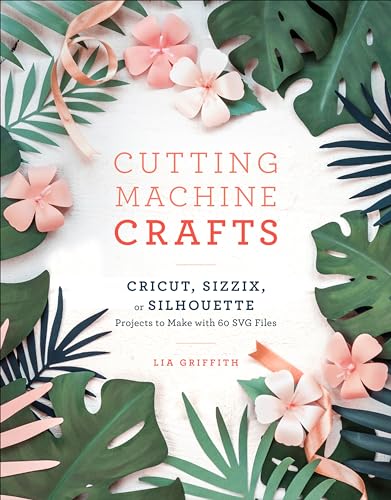
Cutting Machine Crafts with Your Cricut, Sizzix, or Silhouette: Die Cutting Machine Projects to Make with 60 SVG Files — Best for project ideas if you already own a machine
Be clear on what this is: it's a book, not a cutting machine. It appears on this page because it's the one item here that pairs directly with a cutter you already own, and pretending otherwise would be the exact bait-and-switch this site tries to avoid.
The title states the scope plainly — die cutting machine projects to make, with 60 SVG files, aimed at Cricut, Sizzix or Silhouette owners. That cross-brand framing is the useful part for a student: if you inherited a hand-me-down cutter from a relative and it isn't the brand every tutorial assumes, a resource written across three ecosystems is more likely to be usable. Beyond the title, the supplied listing information does not include feature bullets, so page count, project difficulty and how the SVG files are delivered are not established here.
Pros
- Written across Cricut, Sizzix and Silhouette rather than one brand's ecosystem
- The verified product title for ASIN 1984822357 names 60 SVG files, though the supplied listing information does not state whether or how those files are provided
- Useful for a cutter you already own, including a hand-me-down machine
- It is a project book, not a cutting machine, and will not cut anything on its own
- The supplied listing information does not include feature bullets, so details beyond the title are unknown here
Verdict: Worth adding if a cutter is already on your desk and you want project direction; skip it if you're still choosing the machine itself.
What to Look For in a Dorm Cutting Machine
A dorm changes the priority order. These are the criteria that actually decide the purchase, in the order they should decide it.
- Working footprint, not just body size. A cutter needs clearance in front and behind for the mat or material to travel. VEVOR publishes a maximum paper feed width of 28 inches / 720 mm, which tells you the material path is wide even though the listing does not state the machine's exterior dimensions. Tape out the space on your desk first.
- How designs get in. This is the single biggest split between the two machines here. VEVOR states compatibility with SVG, EPS, PLT and AI files plus included software with a library of pre-made designs. The Cricut Expression uses a cartridge system that requires no computer. Neither approach is objectively better; one suits a person who designs, the other suits a person who wants to cut and go.
- Material range versus what you'll actually cut. If your projects are paper, cardstock and sticker sheets, a paper-and-vinyl workflow is enough. If you want shirts and tote bags, you need HTV support — VEVOR lists HTV among 100+ compatible materials with 10 adjustable blade pressure levels — and then a separate heat source.
- Noise, honestly assessed. Cutting machines move a carriage back and forth at speed, and VEVOR publishes speeds from 20 to 400 mm/s. Neither listing here states a decibel rating, so no one can tell you from these specifications which is quieter. If your roommate is a light sleeper, plan to cut during the day rather than trusting a marketing adjective.
- What's in the box. VEVOR states 2 types of blades and 7 materials are included; Cricut states two cartridges are included. Starter contents affect what you can make in week one without a second purchase.
- Your housing rules. Residence life offices publish appliance policies for a reason, and heat-generating craft tools are a common flashpoint. General consumer product safety information is published by the CPSC, and broader consumer guidance is available via USA.gov.
How We Research
Every factual statement above comes from one of two source types: Amazon Creators API verified product records and product listing feature bullets, all retrieved on September 9, 2026. We read those bullets closely, compare the numbers they publish, and reason about what a stated figure implies for a specific buyer — for example, what a 28-inch maximum feed width means for a standard dorm desk.
What we do not do is test. There is no lab here, no bench, no stopwatch. Where a listing is silent — noise levels, exterior dimensions, warranty terms, duty cycle — we say it is not stated rather than filling the gap from memory or assuming the manufacturer never publishes it elsewhere.
Final Verdict: Which One, and Why
If you design your own files, buy the VEVOR Cutting Machine. The deciding specification is format support: SVG, EPS, PLT and AI, alongside 100+ compatible materials including adhesive vinyl, HTV, cardstock and EVA foam with 10 adjustable blade pressure levels. That combination lets a design or art student cut work they made themselves, on the material the project actually calls for. The catch is space — plan around its stated 28-inch maximum feed width.
If your laptop is already overloaded, buy the Cricut Expression Electronic Cutting Machine. The deciding specification is that its cartridge system requires no computer, with an LCD screen, 6 modes and 4 functions handling operation on the machine itself, and a stated cut range of 1/4 inch to 23-1/2 inches that covers everything from small lettering to long banners. It runs without a computer, though the supplied listing information does not state what other design sources it accepts.
If a machine is already on the desk, add the project book. The verified product title for ASIN 1984822357 names 60 SVG files alongside Cricut, Sizzix and Silhouette; beyond the title, the supplied listing information does not establish whether or how those files are provided, or any further details.
And on the press question: don't let a roundup talk you into a hot appliance your housing contract may prohibit. Read the rules, then shop.
Frequently Asked Questions
Measure before you order. The supplied listing information for both machines here does not state exterior dimensions, but VEVOR publishes a maximum paper feed width of 28 inches / 720 mm, which implies a wide material path plus clearance front and back. Treat the feed width as your minimum planning number, not the machine's actual size.
Are craft cutting machines quiet enough for a shared room?
Neither listing on this page states a noise level, so any claim about decibels would be invented. What is published is VEVOR's speed range of 20 to 400 mm/s — slower settings generally mean a calmer carriage, though that is an inference rather than a measured result. The safe plan in a shared room is to cut during waking hours.
Do I need a laptop to use a cutting machine in a dorm?
Not necessarily. The Cricut Expression Electronic Cutting Machine uses a cartridge system that Cricut states requires no computer, with controls on an LCD screen offering 6 modes and 4 functions. The VEVOR machine takes the opposite approach, working from SVG, EPS, PLT and AI files with included design software.
Can these machines cut heat transfer vinyl for shirts?
VEVOR lists HTV among the 100+ materials its cutter handles, alongside adhesive vinyl, cardstock and EVA foam. Cutting is only half the job — applying HTV requires a separate heat source, which is a decision to make against your housing appliance rules rather than a purchase to make automatically.
What comes in the box with each machine?
VEVOR states its machine includes 2 types of blades, 7 materials such as vinyl, HTV and stickers, and design software with an image library. Cricut states the Expression includes a Plantin SchoolBook font and shape cartridge plus an Accent Essentials mini shape cartridge, and ships in Certified Frustration-Free Packaging.
How accurate are these cutters for small, detailed designs?
VEVOR publishes an accuracy rating of ±0.1 mm and automatic edge detection for cutting along printed patterns, which suggests print-then-cut sticker work is within its intended use. Cricut publishes a cut size range starting at 1/4 inch, which indicates small elements are supported, though no accuracy tolerance is stated in the supplied listing information.
Is the project book a substitute for a machine?
No. Cutting Machine Crafts with Your Cricut, Sizzix, or Silhouette: Die Cutting Machine Projects to Make with 60 SVG Files (ASIN 1984822357) is a book, not cutting hardware; beyond its title, the supplied listing information does not establish what it provides.
Sources & Methodology
Nothing on this page was physically tested, taken apart, timed or measured by this website; we own none of these machines and run no lab. What we did was pull the Amazon Creators API verified product records and the product listing feature bullets for each item on September 9, 2026, and work through the published numbers — file format lists, cut ranges, feed widths, blade pressure levels, included accessories — to figure out which buyer each specification actually serves.
For craft cutters specifically, that method gets you a long way, because the decisions that matter most in a dorm are decisions specifications answer: how designs enter the machine, what materials it accepts, and how much desk it will demand. It does not answer noise, longevity or real-world cut quality on tricky vinyl, and neither listing here publishes figures for those. Where you need those answers, go to owner discussion and the manufacturer's own documentation before you buy.