As an Amazon Associate this site earns from qualifying purchases.
Quick Picks
| Product | Role in a layering workflow | Published spec that matters |
|---|---|---|
| HTVRONT HTV Roll Heat Transfer Vinyl | The base or top layer material | Listing publishes exact press settings and a cool-then-peel instruction |
| Heat Press Mat for Cricut Easypress: Ecraft (11 x 13 inch) Double-Sided | Heat-stable pressing surface | Rated to 428°F (220°C), about 0.5 in thick |
| Heat Press Machine For T Shirts | Small-area tack presses and small designs | 7 x 5 in plate, auto shut-off after 10 minutes of inactivity |
Disclosure: We earn a small commission from qualifying Amazon purchases at no extra cost to you.
As an Amazon Associate we earn from qualifying purchases. This page contains affiliate links, and we may receive a commission if you buy through them — at no extra cost to you.
As an Amazon Associate, we earn from qualifying purchases.
Last Updated: September 2026
Short answer: layered HTV peels because the bottom layers get cooked for the full press time two, three or four times over. Tack each lower layer for a couple of seconds, press only the final layer for the full time the vinyl maker lists, keep a cover sheet between the plate and the exposed vinyl, and peel exactly the way that specific carrier tells you to. Do those four things and multi-layer iron-on has a much better chance of holding up in the wash.
Here's the thing: most "htv peeling after washing" problems are not bad vinyl. They are a heat budget problem. Every additional press adds heat the adhesive underneath has already absorbed.
The Problem: Why Multi-Layer Iron-On Lifts
A single-layer transfer sees one full press cycle. A three-color design means the bottom layer sees three. The adhesive on that bottom layer has a working window, and past it the adhesive degrades, the carrier gets gummy, and the corner you notice lifting on wash day was already compromised before the shirt went in the machine.
The second cause is the opposite error: a nervous crafter under-presses everything to avoid over-cooking, and no layer ever fully bonds.
The third is mechanical. A soft ironing board or a padded couch cushion absorbs pressure instead of transmitting it. HTVRONT's listing is blunt about this dependency, noting the iron-on vinyl is sensitive to temperature and pressure. If your surface flexes, your pressure number is fiction.
Cold Peel vs Warm Peel: Follow the Carrier, Not a Blog
There is no universal rule here, and anyone who tells you otherwise is guessing. Peel behaviour is a property of the specific carrier sheet, and the manufacturer prints it.
For the white roll covered below, HTVRONT's listing states pressing parameters of 300°F to 320°F, mid-pressure of 5 to 8 kg, and 10 to 15 seconds, followed by cooling for 1 to 2 minutes before peeling. That is a cold-peel instruction. Peeling a cold-peel carrier while it is hot is one of the fastest ways to lift a design straight off the fabric.
If you mix brands across layers, each roll keeps its own peel rule. Check every one.
Step-by-Step: How to Layer HTV Vinyl
- Mirror and cut each color separately. Cut every layer as its own job, mirrored. HTVRONT advises a clean, sharp blade before cutting so the design cuts well and weeds cleanly.
- Weed and stack a dry run. Lay the weeded layers on the shirt unpressed to confirm registration before any heat touches the garment.
- Pre-press the blank. Five to ten seconds on the bare garment drives out moisture and flattens fibers. Trapped moisture is a common cause of adhesion failure.
- Press the bottom layer fully. Use the base vinyl's own published settings — for the HTVRONT roll, that is the 300°F to 320°F, 10 to 15 second window on its listing.
- Peel the bottom layer per its instruction. Cold peel means wait. Do not rush this to save ninety seconds.
- Tack, don't press, the middle layers. Two to three seconds is enough to hold position. This is the single step that saves layered designs.
- Always use a cover sheet from layer two onward. A Teflon sheet for layering vinyl, or plain parchment, stops the plate from touching already-pressed vinyl and prevents shine, scorch and adhesive transfer.
- Full press the final layer. The last press is the one that bonds the whole stack. Give it the full published time, then cool and peel.
Tools and Products You'll Need
> Recommended Products: a vinyl with published press settings, a heat-stable mat, and a press you can control. Below is what the supplied listing data supports for each.
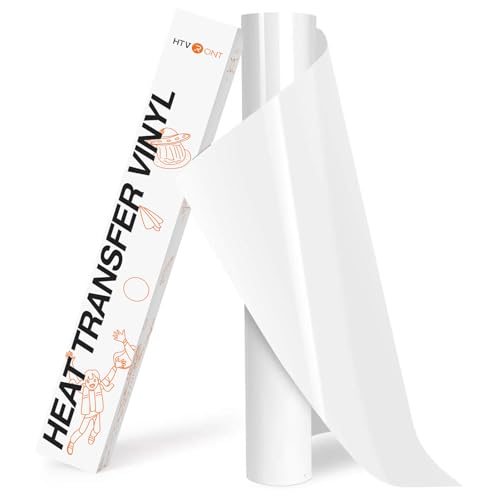
HTVRONT HTV Roll Heat Transfer Vinyl - 12" x 8ft White HTV Vinyl for Shirts — Best for a base layer with settings you can actually follow
What earns this a spot in a layering guide is that the listing publishes real numbers instead of vague advice. The HTVRONT HTV Roll Heat Transfer Vinyl - 12" x 8ft White HTV Vinyl for Shirts (ASIN B089ZVY1L1) is a 12 inch by 8 foot roll, and HTVRONT's listing says its rolls are perfect for 12''x12" and 12''x24" cutting mats. HTVRONT's listing describes the vinyl as compatible with all cutter machines, and lists the material as SGS certified and safe to wear, suitable for athletic mesh fabrics, cotton, polyester and cotton blends, lycra/spandex and other textiles.
White is the workhorse layering color — it blocks garment color under thin top layers.
Strengths: explicit temperature, pressure, time and cool-peel guidance; wide fabric compatibility list; a length that supports repeated layered projects.
Limitations: this is a single white roll, so a multi-color layered design requires additional colors bought separately. The listing's durability language is the seller's own claim, not independent wash testing.
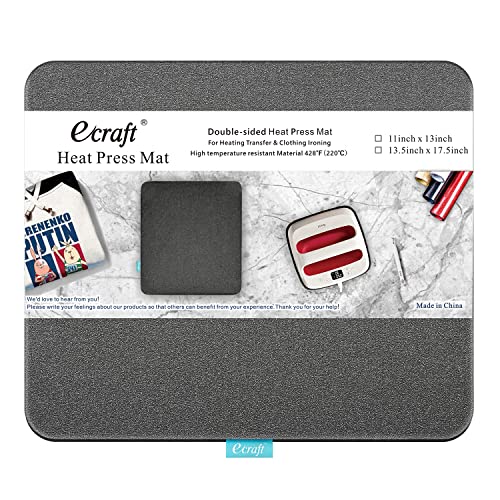
Heat Press Mat for Cricut Easypress: Ecraft (11 x 13 inch) Double-Sided Heating Ironing Mats for Craft Insulation Transfer HTV VinylHeat Press Machine — Best for a heat-stable surface that outlasts your press temperature
Pressure only works against something solid. The mat measures about 11 x 13 inches with a thickness of approximately 0.5 inches, and Ecraft describes it as non-stick refractory material. Ecraft rates the mat to a maximum of 428°F (220°C). HTVRONT separately publishes a 300°F to 320°F press window for the HTVRONT HTV Roll Heat Transfer Vinyl - 12" x 8ft White HTV Vinyl for Shirts.
Ecraft says the mat works with Cricut EasyPress and EasyPress 2 and that two sizes are offered. It also lists countertop and furniture protection as a purpose, which matters if your craft space is the dining table.
Strengths: a stated maximum temperature of 428°F (220°C); a flat, non-stick working surface; light and flat enough to set up anywhere.
Limitations: at 11 x 13 inches, adult-size chest designs will need repositioning. The supplied listing information does not state the dimensions of the second size.
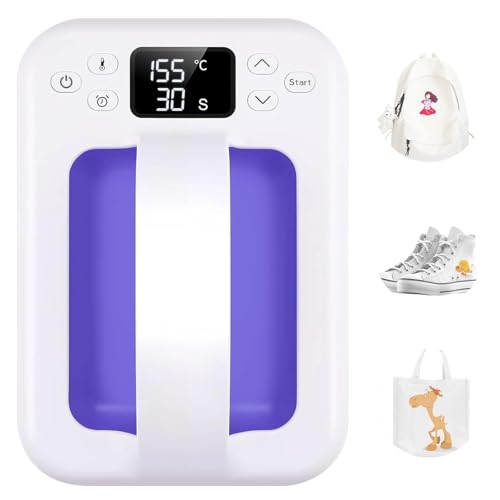
Heat Press Machine For T Shirts, 7" × 5" Portable Mini Heat Press Fast Even Heat — Best for tack presses and small placements
Layering rewards a small plate for step 6. The Heat Press Machine For T Shirts, 7" × 5" Portable Mini Heat Press (ASIN B0CHJFHV5T) has a 7'' x 5'' plate, and its listing describes it as suitable for customizing T-shirts, pillows, socks, masks, hats, canvas bags and mobile phone cases. The listing states an automatic shut-off after 10 minutes of inactivity, plus a safety base that protects the heating plate. The box contains one heat press, one insulated base, a storage cloth bag, several sheets of transfer paper and a user manual.
Strengths: small footprint for detailed placement work; auto shut-off; a starter bundle that gets a beginner pressing immediately.
Limitations: the supplied listing information does not state a temperature range, adjustable settings, or a pressure rating, so confirm those against the manual before committing to a project that depends on a specific temperature. A 7 x 5 inch plate is also narrower than a 12-inch-wide vinyl roll, meaning multiple overlapping presses on large designs.
Tips for Best Results
- Wash the garment before pressing, without fabric softener. Softener residue sits between adhesive and fiber.
- Wait 24 hours before the first wash, then wash inside out on cold.
- Keep total layers to three where possible. Every layer adds thickness and stiffness.
- Trim the bottom layer where a top layer will fully cover it, so vinyl bonds to fabric more often than to vinyl.
- Heat presses are burn and fire hazards; follow the manufacturer's manual, and check the CPSC for recall and consumer product safety information.
Common Mistakes to Avoid
- Full-pressing every layer. The most common cause of layered peeling.
- Peeling a cold-peel carrier warm. HTVRONT's cool-for-1-to-2-minutes instruction exists for a reason.
- Skipping the cover sheet and melting an already-pressed layer.
- Pressing on a soft, springy surface so real pressure never reaches the adhesive.
- Assuming settings transfer between brands. Glitter, flock and stretch films rarely share a base vinyl's numbers.
How We Research
This website does not do hands-on testing. For this guide we read the Amazon Creators API verified product records and the product listing feature bullets for each item named above, retrieved 9 September 2026, and reasoned from the published figures — press windows, plate size, temperature ceiling, box contents — to what they imply for a layered workflow. Where a listing does not state something, we say so rather than filling the gap.
Frequently Asked Questions
Q: Do I need a Teflon sheet for layering vinyl? From layer two onward, yes — a Teflon or parchment cover sheet keeps the hot plate off already-pressed vinyl. It also prevents shine marks on the garment.
Q: Is a cold peel or warm peel better for layering? Neither is universally better; follow the carrier. HTVRONT's listing for its white roll specifies cooling for 1 to 2 minutes before peeling, which is a cold peel.
Q: Why is my HTV peeling after washing even though it looked fine? Usually under-bonded adhesive from insufficient pressure, a soft pressing surface, moisture in the fabric, or fabric softener residue. Lifting that appears after wash three was almost always a bonding problem at press time.
Q: Can I layer HTV on polyester or athletic mesh? HTVRONT lists athletic mesh, cotton, polyester and cotton blends and lycra/spandex among suitable fabrics for its white roll. Synthetics can scorch, so verify the garment's own care label before choosing a temperature.
Q: Will a mini heat press work for layered designs? For small placements and tack presses, yes. A 7 x 5 inch plate means larger layered designs need several overlapping presses, which reintroduces the repeated-heat problem you are trying to avoid.
Final Verdict
If you take one thing from this guide: tack the middle, full-press the end. That sequence fixes more layered-HTV failures than any product purchase.
On gear, the priority order is clear from the specifications. Start with the Heat Press Mat for Cricut Easypress: Ecraft (11 x 13 inch) Double-Sided, because Ecraft rates it to a maximum temperature of 428°F (220°C). HTVRONT publishes a press window of 300°F to 320°F for the HTVRONT HTV Roll Heat Transfer Vinyl - 12" x 8ft White HTV Vinyl for Shirts. Pair it with the HTVRONT HTV Roll Heat Transfer Vinyl if you want a base layer whose press window and peel instruction are published rather than guessed. Add the Heat Press Machine For T Shirts for small-format and tack work — with the caveat that its temperature controls are not described in the supplied listing information, so read the manual first.
Related Resources
- HTV temperature and time settings by material
- Choosing between a heat press and an iron
- Weeding intricate HTV designs without tearing
- Consumer product safety and recall information from the CPSC
- Consumer protection guidance from USA.gov
Sources and Methodology
No one at this website physically pressed, washed or laboratory-tested any product named here, and we run no lab. What we did do is read each item's Amazon Creators API verified product record and its listing feature bullets closely, retrieved 9 September 2026, and compare the numbers that actually govern a layering workflow against one another — the vinyl's published 300°F to 320°F press window against the mat's 428°F ceiling, the mini press's 7 x 5 inch plate against a 12-inch vinyl width. For heat transfer work that comparison is genuinely useful, because layering failures are driven by published temperature, time, pressure and surface-area figures rather than by feel; where a listing is silent, as with the mini press's temperature controls, treat that as a question for the manual rather than a verdict.