As an Amazon Associate this site earns from qualifying purchases.
Quick Picks
| Product | Best suited to | Key published spec | Link |
|---|---|---|---|
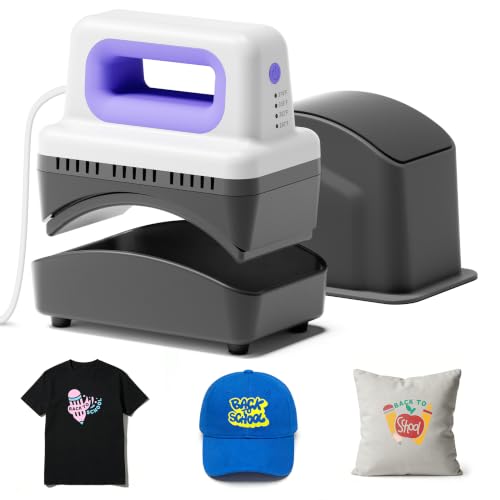
| LIKCUT Hat Press SZ01 | Crafters who want a dedicated cap machine with molds included | The LIKCUT Hat Press SZ01 (ASIN B0G5PYM6DD) listing states 4 temperature settings from 266°F to 374°F. The same listing states a 3.15 x 5.5-inch curved heating plate [S4] | Check Price on Amazon |
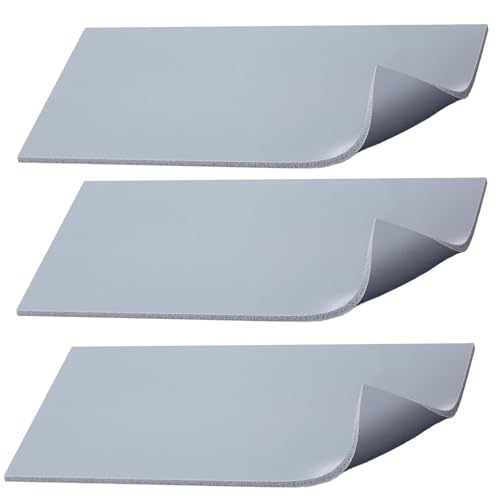
| 3 Pcs Silicone Heat Press Cover Pad 4" x 8" Foam Press Mat | Using an existing flat press on hats, sleeves and pockets | Listed as withstanding temperatures up to 540°F without warping or burning [S3] | Check Price on Amazon |
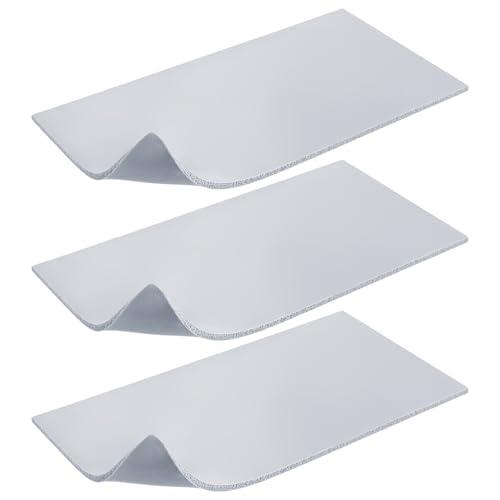
| SELMAIDY 3 Pcs Silicone Heat Press Pad | Pressing small curved zones on hats, mugs, cuffs and bags | Listed as heat-resistant to 536°F, sized 1/8" x 4" x 8" [S5] | Check Price on Amazon |
Disclosure: We earn a small commission from qualifying Amazon purchases at no extra cost to you.
As an Amazon Associate we earn from qualifying purchases. This page contains affiliate links, and we may receive a commission if you buy through them — at no extra cost to you.
As an Amazon Associate, we earn from qualifying purchases.
Last Updated: September 2026
The short answer: curved items fail because a flat platen only touches the high point of the curve. Fix contact first — either with a curved heating plate built for caps, or with a soft, heat-resistant pad that lets a flat platen sink into the shape — then worry about time and temperature. Get contact right and most "my vinyl peeled off the brim" problems disappear.
This website does not do hands-on testing. What follows is built from published listing specifications, read closely, plus the physics that every crafter working curved substrates runs into.
The Problem: Flat Pressure Meets a Round Object
A heat press applies force along one plane. A cap crown is a compound curve, a mug is a cylinder, a tumbler is often a tapered cylinder. Press a flat platen against any of those and pressure concentrates in a narrow band. That band gets full heat and full pressure. Everything on either side of it gets less of both.
That is where the classic failures come from: a design that sticks in the middle and lifts at the edges, a scorch line where the platen bit hardest, ghosting from the transfer shifting as you lower the handle.
There are only two real solutions. Match the tool to the curve, or put something compressible between the heat source and the curve so contact spreads out.
Step-by-Step: How to Heat Press a Hat
- Read the transfer's own instructions first. Vinyl and sublimation sheets ship with a manufacturer time and temperature. That document outranks any general advice, including this page.
- Check what your press can actually reach. A dedicated cap press may top out lower than a flat platen. The LIKCUT Hat Press SZ01 is listed with four temperature settings spanning 266°F to 374°F [S4], which brackets typical HTV territory but is a hard ceiling you should confirm against your transfer's requirement.
- Mount the hat on a form. The LIKCUT kit is listed as including the press, a heat-resistant base and curved hat molds [S4]. A mold holds the crown in shape so the pressing surface is presented to the plate rather than collapsing under it.
- Let the machine stabilize. LIKCUT's listing includes a note that the machine overshoots by roughly 15°C above each preset before settling back to the target, and advises waiting until it stabilizes if your fabric needs precise temperature [S4]. Take that seriously on polyester caps.
- Pre-press for the time your transfer's maker specifies. Drives out moisture and flattens the weave. The supplied facts state no pre-press time for the LIKCUT Hat Press SZ01 (ASIN B0G5PYM6DD); its listing says the press "starts with a simple 3s press and a single button press for 4 temperature settings", wording that is ambiguous — the supplied facts do not establish whether the 3s refers to a pressing time or to starting the unit, so check the manufacturer's manual [S4].
- Position and tape. Heat-resistant tape on two sides stops the transfer walking as the platen closes.
- Press, then peel per the transfer's instruction. Hot, warm or cold peel is a property of the vinyl, not the machine.
- Re-press over a cover sheet if the edges look shy. This is where a soft pad earns its place.
If You Only Own a Flat Press
You can still do caps. Lay a compressible silicone pad on the lower platen, seat the hat over it, and let the pad deform into the crown so contact spreads across the design instead of a single ridge. Both pads here are listed at 1/8" x 4" x 8", a footprint their listings describe as suited to hats, sleeves, pockets and similar small curved areas [S3][S5]. Those are overall pad dimensions. The SELMAIDY 3 Pcs Silicone Heat Press Pad (ASIN B0GT27PX1Y) listing states the size is meant to fit most home and commercial heat press machines and is ideal for precise local pressing on hats, sleeves, pockets, cuffs and other small curved areas [S5]. The 3 Pcs Silicone Heat Press Cover Pad 4" x 8" Foam Press Mat (ASIN B0FQMYRW7T) listing states the pad is designed for hats and facilitates precise imprinting on curved surfaces such as cups, sleeves and pockets [S3]. Those are the sellers' own statements, and neither listing states cap-panel fit or design-area coverage.
Tumbler Press Instructions and Mug Temperature Basics
Honestly, mugs and tumblers are where crafters get burned by guessing. The supplied product records here do not state a recommended mug or tumbler temperature, so this page will not invent one. Use the temperature and dwell time published by the maker of your blank and your sublimation paper — ceramic, stainless and powder-coated blanks do not behave alike, and the coating is what sets the ceiling.
What the evidence here does support: SELMAIDY lists its pad as working on mugs and as compatible with fabric, ceramic and metal surfaces [S5]. The 3 Pcs Silicone Heat Press Cover Pad listing likewise names cups among the curved surfaces it targets [S3]. That makes these pads a cushioning aid for cylindrical work, not a substitute for a mug press or a wrap.
One limit worth stating plainly: neither pad's listing describes it as a clamping device. A pad spreads pressure; it does not generate it.
Tools You'll Need
LIKCUT Hat Press SZ01 — Best for beginners who want a dedicated curved plate and molds in one kit
The case for the LIKCUT Hat Press SZ01 (ASIN B0G5PYM6DD) is specific: its listing states a 3.15 x 5.5-inch curved heating plate and four temperature settings from 266°F to 374°F. The same listing states the kit includes the press, a heat-resistant base and curved hat molds [S4]. That combination means a beginner is not sourcing a form separately.
Operation is described as single-button, with a memory function that retains your settings and a 10-minute auto-off [S4]. Read auto-off as a shutdown safeguard, not permission to leave a hot appliance unattended — the listing does not establish unattended operation, and general consumer safety guidance is to supervise heating appliances in use [S1].
The listing also describes it as usable on clothing, socks, canvas bags and pillows, and pitches a reshaping use for wrinkled or collapsed crowns [S4]. Treat the reshaping claim as the seller's, not an independent finding.
Meaningful limits: the 3.15 x 5.5-inch plate sets your maximum single-press design area, and the 374°F top setting is a ceiling to check before buying if your transfer calls for more. Pressure is applied by hand through the ergonomic handle [S4], which means consistency between presses depends on you.
3 Pcs Silicone Heat Press Cover Pad 4" x 8" Foam Press Mat — Best for adding a cuttable, heat-resistant cushion to a flat press
The listing for the 3 Pcs Silicone Heat Press Cover Pad 4" x 8" Foam Press Mat (ASIN B0FQMYRW7T) states resistance to 540°F without warping or burning, and calls it suited to vinyl and sublimation [S3]. The listing for the SELMAIDY 3 Pcs Silicone Heat Press Pad (ASIN B0GT27PX1Y) states heat resistance to 536°F [S5]. Both are seller-stated ratings, and no tested or comparative performance data is supplied for either pad.
The listing gives its dimensions as 1/8 inch x 4 inches x 8 inches and describes it as aimed at curved surfaces including cups, sleeves and pockets [S3]. It is also described as rolling up for storage and as easy to cut for custom trimming [S3], which is genuinely useful — trimming a pad to match an odd design shape is normal practice.
Limits: the listing's "flawless transfers, zero mistakes" language is marketing, not a performance guarantee, and no independent verification of the temperature figure is supplied.
SELMAIDY 3 Pcs Silicone Heat Press Pad — Best for crafters who want one pad set covering fabric, ceramic and metal blanks
SELMAIDY lists heat resistance to 536°F and the same 1/8" x 4" x 8" sizing, described as fitting most home and commercial heat press machines [S5]. Its application bullet is the broadest of the two pads: t-shirts, hats, mugs and bags, and compatibility with fabric, ceramic and metal surfaces [S5].
The listing attributes bubble, wrinkle and peeling reduction to a high-density structure delivering balanced pressure [S5]. As an inference, that is exactly what a compressible layer should do on a curve — but it is the seller's claim about its own construction.
It is also described as bendable, rollable for storage and cuttable to custom sizes [S5]. Limits: the supplied record does not state a thickness option other than 1/8", so deeply recessed areas may still need a purpose-built pillow.
Tips for Best Results
- Change one variable at a time. Temperature, dwell, pressure — moving all three at once tells you nothing.
- Sacrifice one cheap blank per new material. Cheaper than ruining a customer order.
- Let a machine fully stabilize before the first press of the day, particularly on a unit whose maker documents an overshoot above the preset [S4].
- Trim your pad to the design, not the garment. Both pads on this page are listed as cuttable [S3][S5].
- Cover sheet every time. It protects the plate and the vinyl.
Common Mistakes to Avoid
- Pressing the seam. A cap's front seam is a ridge. Straddle it or your design lifts along that line.
- Assuming more heat fixes weak adhesion. Usually it is contact, not temperature.
- Treating auto-off as babysitting. A 10-minute auto-off [S4] is a fail-safe, not supervision [S1].
- Using a household ironing board for tumblers. No stability, no even contact.
- Trusting a listing's temperature number as a target. A pad's 540°F or 536°F rating [S3][S5] is a survival ceiling for the pad, not a setting for your project.
How We Research
Every figure on this page came from two source types and nothing else: Amazon Creators API verified product records and the product listing feature bullets published on each item's Amazon page, all retrieved 2026-09-09. We compare published specifications side by side — plate dimensions, temperature ranges, stated materials — and reason about what each figure means for a specific buyer. Where a listing is silent, we say so rather than filling the gap. For consumer-safety framing on heating appliances we point readers to public guidance from the CPSC [S1] and USA.gov consumer protection resources [S2].
Final Verdict
If caps are the point of the purchase and you are starting from nothing, the LIKCUT Hat Press SZ01 is the direct answer, because it is the only item here with its own curved heating plate and molds in the box [S4]. That solves the contact problem structurally instead of working around it.
If you already own a flat press, buy pads instead. Between the two, the 3 Pcs Silicone Heat Press Cover Pad 4" x 8" Foam Press Mat (ASIN B0FQMYRW7T) is listed as withstanding temperatures up to 540°F [S3]. The SELMAIDY 3 Pcs Silicone Heat Press Pad (ASIN B0GT27PX1Y) is listed as heat-resistant to 536°F and names ceramic and metal alongside fabric among its compatible surfaces [S5]. Pick on which of those two facts describes your work.
Related Resources
- Choosing a first heat press
- HTV vs sublimation explained
- Cutting machine settings for vinyl
Sources & Methodology
Nobody at this website pressed a hat, a mug or a tumbler to write this guide — there is no lab here and no sample cabinet. What we did do is pull each item's Amazon Creators API verified product record and read its published listing feature bullets line by line on 2026-09-09, comparing plate size, stated temperature range and stated materials across the three products, and flagging where a listing simply does not state something. For curved-surface pressing that gets you a long way: contact geometry and published temperature limits are the specs that decide whether a design sticks, and both are printed on the listing. What specification reading cannot tell you is how a given press feels in the hand over a hundred caps or how a particular pad ages, so treat those as open questions.